Event coverage
Practical meaning
Accident-only and accident-and-illness answer different needs
Document to check
Coverage grant and definitions

Understand insurance on dogs by following one eligible veterinary invoice from the clinic charge to the amount the owner retains.
Use these checkpoints to frame the literal question before reading the full guide.
Insurance on dogs usually means protection against eligible veterinary expenses from accidents or illnesses. Choose the event scope first, then examine exclusions, deductible, reimbursement and limit. The premium keeps the contract in force; it is not a prepaid balance that makes every future veterinary service free.
The sections below show how to verify the answer and what can change it.
| Policy term | Practical meaning | Document to check |
|---|---|---|
| Event coverage | Accident-only and accident-and-illness answer different needs | Coverage grant and definitions |
| History and timing | An accepted application is not acceptance of every condition | Prior-condition and waiting provisions |
| Allowed expenses | An eligible illness can still have excluded bill lines | Expense definitions and benefit schedule |
| Cost sharing and cap | The eligible portion is reduced according to the contract | Calculation clause, declarations and remaining limit |
NAIC distinguishes product categories and notes that reimbursement methods vary. That makes two policies with the same advertised percentage potentially different at the claim stage. A percentage should never be read without its expense basis and calculation order.
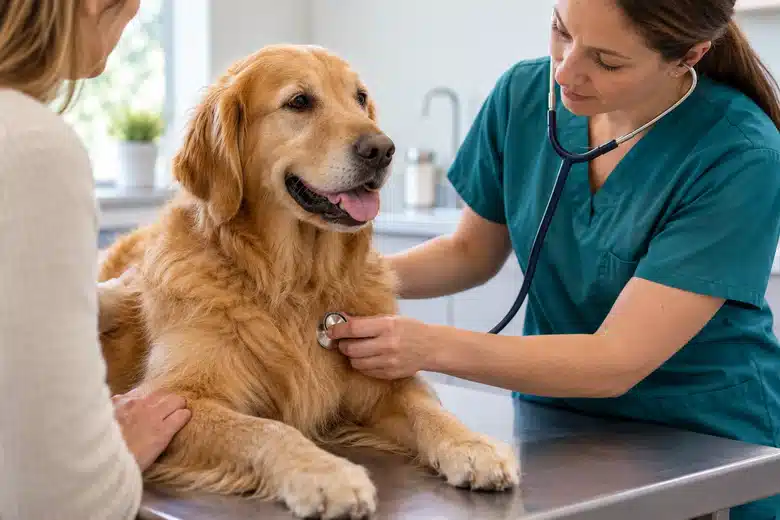
Suppose a dog’s eligible event produces a $1,500 bill. For illustration, $200 is excluded, leaving $1,300 eligible; $200 of the deductible remains, reimbursement is 80%, and enough annual benefit is available. These are invented inputs, not a quote or any assertion about the cost of treatment.
| Method | Computation | Insurer payment | Owner bill share |
|---|---|---|---|
| Deductible first | ($1,300 − $200) × 80% | $880 | $620 |
| Percentage first | $1,300 × 80% − $200 | $840 | $660 |
Healthy Paws’ current coverage explanation uses a reimbursement-percentage-then-remaining-deductible approach. The table demonstrates why order matters; it does not establish that the invented dog’s event or excluded line would receive that treatment under an issued Healthy Paws policy.
Keep policy terms, deductible, reimbursement and limits beside the quote so the comparison stays consistent.
If only $700 of an applicable payout limit remained in either illustration, payment could not exceed that $700 under the assumed cap. Ask whether the limit is annual, per condition or another structure, and whether an optional benefit has a smaller allowance. A large headline limit does not override an exclusion.
A household able to absorb smaller bills may prioritize a larger accident-and-illness limit over routine-care extras. Another may need a lower deductible to make an eligible claim useful sooner. Neither preference excuses an unaffordable clinic payment: calculate what cash must be available before reimbursement, including expenses you already know are outside the policy.
Keep illness cover, preventive allowances and third-party liability in separate rows of your planning sheet. They solve different problems. For an unfamiliar benefit, ask for its definition and cost rather than treating the words comprehensive or full as a guarantee.
No personal policy was supplied for the illustrated invoice. Use these calculations to test the actual wording, not to predict claim acceptance. Urgent veterinary care should not be delayed while purchasing or interpreting insurance.
Only if the entire bill qualifies under the actual contract. Excluded charges must be separated first.
No. The limit and deductible perform different jobs and both can affect the payment.
Keep the policy terms beside the price, then continue to rates when the comparison is clear.